A Change-of-Season Wardrobe Check, One Garment at a Time
A change-of-season wardrobe check helps you decide what to wear, store or repair, so useful clothes stay accessible and each unfinished task has a clear next step.
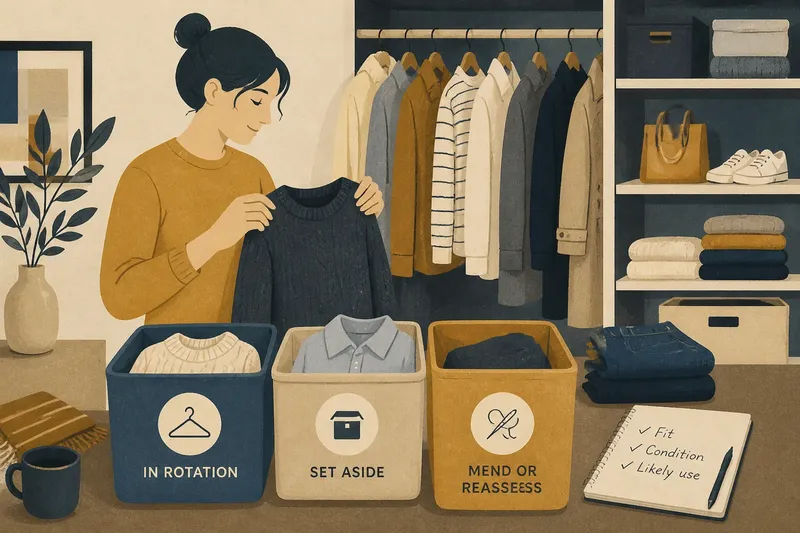
The common mistake in a change-of-season wardrobe check is to pull everything out at once and judge it by the mood of the moment. You can end up with a heap, a tired evening and no clear sense of what needs attention. Instead, review a few garments at a time and give each one a practical destination: keep it in rotation, store it for another season, or set it aside for a specific repair or decision.
How many garments should you review at once?
Start with three to five garments from one category, such as the knitwear you reach for on cool mornings or the shirts you wear to work. Put three labelled destinations nearby: in rotation, set aside and mend or reassess. If you finish that group with energy to spare, choose another; there is no need to empty the wardrobe.
Handle each garment rather than making decisions from a folded stack. Try it on if you are unsure about its fit, but skip that step when the fit and condition are already clear. Ask the same questions each time:
- Fit: Can you move comfortably, and does the garment sit as you want it to? If yes, keep fit off the list of concerns; if no, set it aside to reassess or consider an alteration.
- Condition: Is it clean and wearable? If yes, it can go into rotation or storage; if it needs cleaning or repair, note the specific task and keep it out of the ready-to-wear group.
- Likely use: Can you name a real occasion, outfit or kind of day when you would wear it in the coming season? If yes, keep it accessible; if not, set it aside with a clear reason to reconsider it.
These questions keep the review grounded in use rather than guilt. A gift, an expensive purchase or a garment associated with a past version of yourself does not have to earn space by its history alone. Nor does every item need to be discarded just because it is not useful this month.
When does a garment belong in the current rotation?
Keep a piece in rotation when it fits the way you want, is in wearable condition and has a plausible place in your routine. That place can be ordinary: a cardigan for a chilly office, a cotton dress for an easy weekend, or waterproof trousers for a familiar walk. You do not need to plan a special outfit for every garment.
Check fit in motion as well as in front of a mirror. Sit, reach forward and lift your arms. Notice whether a waistband digs in, a sleeve pulls, a hem catches or a layer feels uncomfortable over the clothes you actually wear beneath it. A coat that closes over a thin top, for instance, may feel restrictive over a jumper.
Look over seams, fastenings and fabric in good light. A missing button may be a simple repair; an itchy collar or a skirt that needs constant adjusting is a reason to pause. If the item is clean and ready, put it where you can reach it. A garment buried at the back of a crowded rail is less likely to serve its intended purpose.
When should you store a garment for later?
Set a garment aside when its season has passed, its use is occasional or you are not ready to decide. This is not the same as declaring it a failure. A heavy wool coat may be useful in cold weather and unnecessary during a mild spell; a party top can wait for occasions that suit it without taking up the easiest-to-reach part of your wardrobe.
Make the pause specific. Fold clean knitwear into a breathable storage bag or box, keep shoes dry and away from direct heat, and store delicate pieces so their fastenings do not snag other fabrics. Add a simple note if you are waiting for a reason to reassess, such as “try with the grey trousers” or “check fit when the weather cools”. Avoid storing anything damp or soiled, since dirt and moisture can make later care harder.
Say you find a linen shirt that fits well but feels too cool for the current weather. You wash and dry it according to its care label, fold it with the warm-season clothes and add a note to reconsider it when lighter layers return. The shirt is clean and stored for a defined reason, rather than taking up daily space as an unresolved decision.
Should you repair, clean or reassess it?
Choose repair when the problem is clear and the garment still has a role. A loose button, a small open seam or a hem that has come down may be straightforward to address. Put the item with the button or thread it needs, or place it in a bag ready for a tailor, rather than mixing it with clothes you can wear now.
Choose cleaning when the garment is otherwise comfortable and useful but not ready to wear. Check the pockets, brush off loose lint and look for marks before putting it away. For unfamiliar fabrics or a stubborn stain, follow the care label or ask a reputable cleaner; the suitable method depends on the garment and its maker’s instructions.
Reassess rather than automatically mend when the fault changes how you feel in the garment. If a favourite skirt has become awkward to fasten, or a jumper’s rough patch makes you avoid wearing it, note the problem and decide whether an alteration or repair would genuinely make it useful. You are not obliged to spend effort rescuing every piece.
What if fit, condition and use point in different directions?
What if it fits but you rarely wear it?
Keep it only if you can name a realistic occasion or outfit that calls for it. If the use is too vague to picture, set it aside with a reason to reassess rather than letting it drift back into the everyday rail.
What if you wear it often but it needs repair?
Move it to the repair group and make the next action concrete: replace a button, arrange a seam repair or ask a tailor about an alteration. If the repair would not address the reason you avoid wearing it, reassess the garment instead.
What if it fits now but may not suit the coming season?
Judge it with the layers and settings you expect to use, not only with what you have on during the review. If it works under a coat or in a heated room, keep it accessible; if its role is clearly seasonal, store it cleanly for later.
What if you cannot decide?
Put the item in a separate holding group and write down the question you need answered, such as whether it works with your usual shoes. Revisit it after wearing the rest of the relevant clothes; the decision may become clearer without pressure.
How can you make the next review easier?
Keep the process modest. Review one category at a time, and stop when your attention fades. A short note on a storage box can record what is inside and why it is there; a mending basket can hold only items with a clear next action. These cues are more useful than an elaborate inventory you will not maintain.
It is not worth arranging garments by a complicated colour system or photographing every item unless you genuinely enjoy doing so. The point is to make usable clothes easier to find and unfinished decisions easier to see, not to turn care into another project.
A change-of-season wardrobe check works best when each garment gets a plain, individual answer: ready for your current routine, useful later, or waiting for a specific repair or decision. If you finish with clean clothes back in reach and a short, actionable repair group, you have made the next dressing choice easier without adding a shopping list.