The Shoulder Seam and the Shape of a Jacket
Learn how a jacket’s shoulder seam and sleeve setting shape its outline, with simple cues for reading the jackets already hanging in your wardrobe.
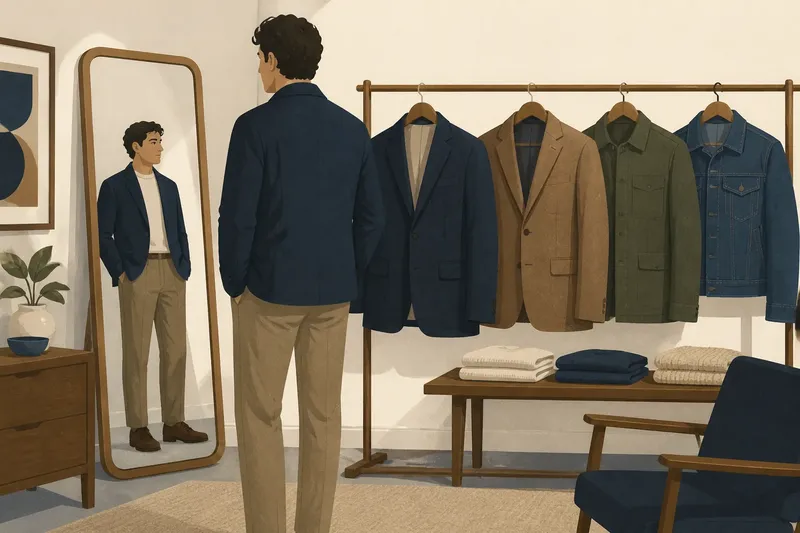
The common mistake with a jacket is to judge its fit from the front, then blame the shoulder when the whole outline feels wrong. A shoulder seam can sit neatly while a stiff sleeve head, a heavy fabric or a cut intended to stand away from the body creates that impression. Reading the shoulder seam and jacket shape together helps you tell what the garment is designed to do—and whether its outline suits the way you want to wear it.
Give the question a week rather than reaching for the tape measure or making an immediate alteration. Over several ordinary dressing moments, look at one jacket from different angles, then compare it with another. You are not trying to find a single correct shoulder position. You are learning which visible cues come from the seam, which come from the sleeve setting and which belong to the jacket’s overall structure.
What should you notice on the first day?
Choose a jacket you already wear and put it on over the sort of top you normally layer underneath. Stand naturally in front of a mirror; let your arms rest rather than holding your shoulders back for inspection. Look at where the shoulder seam meets the top of the sleeve.
On many tailored jackets, that seam sits close to the edge of the shoulder. It may align with the point where the shoulder begins to slope into the arm, but bodies and patterns vary, and the jacket may have been designed with a softer or more relaxed line. A seam that extends beyond that point can create a dropped, broader-looking outline. A seam that sits farther inward can make the shoulder look narrower or more sharply defined.
Notice the fabric as well. A soft, unlined jacket may follow the body and show small folds that a crisp, padded jacket hides. Neither automatically signals a problem. The useful question is whether the line looks intentional and feels comfortable in the way you wear the garment.
How does the sleeve setting change the outline?
The sleeve is attached at an opening called the armhole, and the way it is set affects how the jacket hangs. On a conventional tailored jacket, the sleeve head—the fabric at the top of the sleeve—may be shaped with a little extra fullness. That shaping can help the sleeve sit smoothly and give the shoulder a rounded, supported appearance.
Other jackets use a flatter sleeve head or a more relaxed construction. The sleeve may fall more naturally from a dropped seam, or the armhole may be cut to allow a broader, less fitted shape. A raglan sleeve, identifiable by a seam running diagonally from the neckline towards the underarm, creates a different shoulder line from a sleeve attached at a more familiar curved join.
Check what happens when you move an arm forward to reach for a door handle, then let it rest again. Does the jacket pull across the back? Does the sleeve twist? Does the shoulder line bounce back into place, or stay caught in a fold? One movement cannot diagnose a pattern or an alteration, but it helps you connect the seam’s appearance with the garment’s behaviour.
What can a wrinkle tell you—and what can’t it?
Folds around the armhole are easy to misread. A few soft creases may simply come from the way the cloth bends as you move. A persistent diagonal drag line, a sleeve that spirals, or fabric bunching where the sleeve joins the body can point to tension or to a shape that does not work well with your posture and usual layers.
Look at both sides. Small differences are common, since bodies are not perfectly symmetrical and jackets can shift while being worn. If one side repeatedly sits differently, first smooth the lining and settle the jacket on your shoulders. Then check whether the difference returns while you stand naturally. That tells you more than repeatedly tugging the hem or pinching the seam into position.
A wrinkled sleeve is not an invitation to iron the shoulder directly. Heat and pressure can flatten shaping or mark delicate cloth. For care, follow the garment’s label and maker’s instructions; if a structural change seems necessary, a qualified tailor can assess the jacket in person.
What should you compare through the week?
On the second day, compare the chosen jacket with another one that has a visibly different outline: perhaps a soft overshirt against a structured blazer, or a relaxed denim jacket beside a neat wool jacket. Wear each with a similar base layer if convenient. The point is to notice the silhouette, not to rank either garment as better.
On the third day, look at the jackets from the side. A shoulder that appears balanced from the front may project forward or slope differently in profile. Notice where the sleeve hangs in relation to the side seam, and whether the collar stays close to the back of the neck. These details contribute to the outline, but the jacket’s cut, cloth and construction work together; the shoulder seam alone cannot explain every line.
On the fourth day, wear the jacket during a normal task that involves reaching, sitting or carrying a bag. Observe whether the sleeve remains comfortable and the garment settles back after movement. Do not force a pose or keep adjusting the shoulder. The aim is to see how the jacket behaves in the routine for which you actually use it.
On the fifth day, try a different layer underneath. A shirt, fine knit and bulky jumper occupy different space, so a jacket can look smooth over one and strained over another. If the shoulder feels good over a shirt but restrictive over a knit, that may be a layering limit rather than a seam defect.
On the sixth day, revisit the first jacket after it has rested on a hanger. A sturdy shaped hanger supports the shoulder area more evenly than a thin wire hanger, which can leave a ridge or a dent. Compare the outline before putting it on and after wearing it; a temporary crease from storage is not the same as a persistent fit issue.
On the seventh day, decide what you have learned. Is the shoulder line part of a relaxed design you enjoy, a structured shape that works with your usual clothes, or a source of repeated discomfort? You might keep wearing it as it is, reserve it for lighter layers, or ask a tailor whether an adjustment is realistic for that construction. Shoulder alterations can be complex, so a visible seam position by itself is not enough to decide.
Which jacket details are easiest to misread?
Does the shoulder seam have to end exactly at the shoulder?
No. The seam’s position depends on the jacket’s intended cut, from close tailoring to a deliberately dropped shape. Judge it alongside the sleeve, fabric and overall outline rather than treating one body landmark as a universal rule.
Can shoulder pads make a jacket look too broad?
They can add height or definition, but their effect depends on the pad’s shape and the jacket’s cut. Compare the jacket on a hanger and while worn, and notice whether the shoulder looks balanced with the collar, sleeves and body.
Why does the sleeve pull when I reach forward?
Movement can reveal limits in the armhole, sleeve shape, fabric or the layer underneath. If the pulling is persistent or uncomfortable, try the jacket over a lighter top and consider asking a tailor to assess the construction.
Is a dropped shoulder a sign that the jacket is too large?
Not necessarily: some jackets are intentionally cut with the seam below the natural shoulder point. Look for whether the relaxed line is consistent and whether the sleeves and body sit as the design suggests, rather than deciding from the seam alone.
What is not worth the effort?
There is little value in measuring the distance from seam to shoulder and treating the result as a verdict. Nor do you need to compare every jacket in your wardrobe in one sitting. One close look at a familiar garment, followed by a few ordinary wears, gives you clearer evidence than a long session of pinching fabric or chasing a supposedly perfect line.
As you build an eye for shoulder seam and jacket shape, keep one practical distinction in mind: appearance and comfort are related, but they are not the same question. A jacket can have an unusual outline that you like, or a polished line that restricts the movements your day requires. The most useful reading is the one that helps you choose when to wear it, how to layer it and when a professional opinion might be worthwhile.